|
Frequently Asked
Questions: About Travel to Ladakh |
 |
 |

|

-
How to reach Ladakh?
There are daily flights from Delhi to Leh from all major Airlines, and
there are two other options coming by road from Srinagar, and Manali both
these takes two days with one night's stop on the way. These roads are open
mostly from May to October.
-
Whom should I have to contact on reaching Leh ?
You should be contacted by our Tour Manager and in case you don't
book in advance with us, you are just a call away to us. Call our 24 Hours No.
9419269690
-
Am I fit enough for adventure traveling in Ladakh?
The trips organized by Yasmin Trek & Tour will be enjoyed by anyone
who has an enthusiasm for the outdoors, different cultures and overseas travel
and is prepared to be open minded and flexible at times!
Our trips are fun and informal and attended by a wide range of people. We
offer a range of trips which are all graded for difficulty to help you choose
your holiday, if you would like advice please get in contact with us !
-
How long does it take to get acclimatized in Ladakh?
Most people going to a height of 3500mt. abruptly may naturally feel a
difference. Time taken for acclimatization varies from person to person,
usually you have to take complete rest for the 1st day even if you are feeling
fine. Avoid alcohol at least for first three days, and drink water, juice and
tea as much as possible.
-
How can we make a reservation for the trek with Yasmin Trek
and Tours ?
We encourage you to book as early as possible to ensure you get the holiday
you would like. We have tried to keep the booking procedure very simple. To
book a place on a trip, please follow these steps:
1. Choose the trip and ask for a Day by Day itinerary by clicking a link < Ask
for Detailed Itinerary > to get the latest update for the selected trip.
2. You will shortly receive the conformation from our Tour Manager.
3. Once we confirm your place, you'll have to pay a deposit of 30% of the
total amount in our bank in Leh as an Advance/Security Deposit. Which will
ensure your place for the trek with us.
4. Book your flights and obtain a travel insurance (please send a scanned copy
of your travel insurance details by email along with the copy of the passport
).
-
What about travel insurance?
You must take out adequate insurance in the unlikely event you become sick or
injured and a medical evacuation is required, and evidence of insurance must
be shown to us before departure.
-
What do we do with the garbage which is produced during a
trek?
As we are an eco friendly tour company and being a local trekking company, we
are very keen to keep Ladakh clean, that's why we strictly instruct our staff
to bring back all the garbage produced during the trek.
-
Why are some treks more expensive than others?
If we have to organize a trek near Leh it's less expensive for
transportation, and same is for the horses as we have to send them to the
starting point, even after finishing the trek we have to pay for the horses
for reaching Leh. That's why there are different rates for different trek
routes.
-
What is included in a trek?
Transportation both ways (to the starting point and coming back from the
finishing point by taxi or mini bus), Tents, mattresses, pack Horses, food,
guide, cook, cooking gear, wildlife fees, camping fees, and inner line
permission where its needed.
-
What kind of Food is provided to our trekkers during the
Trek?
Breakfast…….
Porridge, Cornflakes, Muesli, Bread, Apricot Jam, Honey, Butter, Peanut
Butter, Cheese, Pan-Cake, Omelette, Tea and Coffee.
Lunch…………
(You will have Pack-Lunch while trekking)
Sandwiches, Boiled Eggs, Boiled Potatoes, Fruit Juice, Chocolate Bars,
Biscuits, and Peanut Candies.
Tea Time……..
You will have Instant Noodles Tea & Coffee with Biscuits, when you ends the
days trek.
Dinner………...
Soup, Rice, Curry (Veg. Mushroom, Paneer, & Dal) Noodles (Thukpa & Chowmien)
Veg Momos, Tuna Momos, Spring Rolls, and for Deserts Custards, and Fruits
Cocktail.
Please Note: All of the above items are served different on different
days, and the items are subjected to the availability in the market.
Drinking Water.
For the 1st day we will provide you Bottled Mineral Water, and from the 1st
evening the guide will provide you boiled water, and you can refill any time
you want. As we are an Eco Sensitive Organization , we are hesitant to provide
bottled water for the whole trek.
-
What about drinking water during the trek?
For the first day we will provide you mineral water, but from 1st evening
of the trek the cook will supply boiled water, which would be pure just coming
from the glaciers, supply will continue till the end of the trek.
-
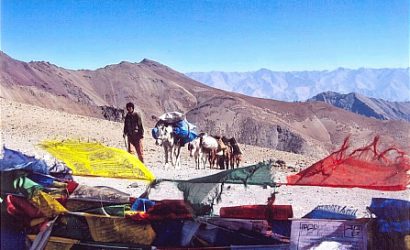
Who carries the things/gears, and food during the trek?
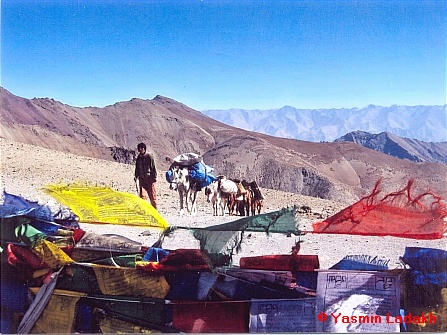
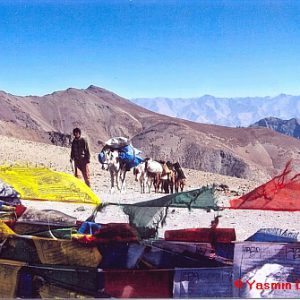
In Ladakh normally you have to trek around the height of 4000mts and the
passes are around 5000mts so its very difficult to carry heavy loads at this
height, that's why we provide horses/ponies they will carry everything,
trekkers will have to carry only the pack lunch, water, camera, note book, and
some delicate things which they don't want keep with the horses.
-
Which are famous mountaineering peaks in Ladakh?
The famous mountaineering peaks in Ladakh are, Sasser Kangri 7627mts in
Karakuram range Nun 7135mts Kun 7085mts Zanskar range Kang-yatse 6400mts Stok
Kangri 6150mts in ladakh range.
-
Where do I need a special permission?
As Ladakh is surrounded by China in the east and from south west it's
covered by Pakistan, there fore doing sight seeing or trekking near to these
boarder areas you need to apply for inner line permission, which you can
obtain just with in a day through any local travel agent based in Leh.
Foreigners are required to carry a valid permit visiting Dha Hanu, Nubra,
Korzok, Samad Rokchen, Karnak and Pangong Tsho, Permits can be obtained travel
agent, paying a small fee.
-
Are there any dangerous areas to consider?
Some areas are dangerous because of falling stones and landslides due to
rain, wind or animals. these places are:
-From Tantse just before Kuru
-Opposite of lchar
-After crossing bridge from Pentse
-From Lartsa (Gongmaru La) to Chuskyurmo
-From Shang Sumdo to Martselang
-From Wanla just before Phanjila
-From Phanjila before Hinju on bridge stones falling
-Between Phukthal and yata
-From Dungdungchen La to Chilling: From Sanak take left if raining
-During period of rainfall between Sumdo and Machu
-Between Henasku and Kanji
-
Are there any difficult areas to consider?
-Startsabuk Tsho in June because of flies
-Between Startsabuk Tsho Kar up to the middle of June because of melting snow
and ground giving mud
-Before Hanupata from Phanjila stay with ponies because of track along steep
ravine
-Between Sumdo and Ashuta largepart of the trail difficult because of low,
overhanging rocks
-Avalanche danger just before Hanamur on the way to Padum on the Chadar trek
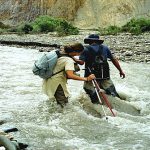
Are there any notorious areas for steam/river crossings?
-Between Stongde and Shade Go only after beginning August
-Between Shade and Satak Go only after August
-Chubchak and Nyari Nyarsang (on the Go only after 1st week September“Zhunglam”
trek)
-Between Lung and Panggok Go only after August
-Between Shilla and Nyigutse Go only after July
-Between Dibling and Lingshed Sumdo Go only after September
-Between Machu and Sengge La Go only after September
-Between Shingo and Skyu
-Between Nyeraks and Pharkunsa
-Between Chuskyurmo and Lartsa (Gomgmaru La)
|


|
 |
 |
 |
|
|
 |
Special Packages with us |
 |


Comfortable Rooms
|
 |
Excellent Services
|

We take extra
care to provide
you the comfort
and services.
We are at your
service 24 hours.
more

|
 |

 |
Newsletter subscription |
 |

 |

Photo Gallery |
 |
Online Tour of
Ladakh
|

Click to go for Online Tour of Ladakh
BOOKS ON LADAKH

LADAKH ECO PLEDGE


|
 |
 |
 |
|
|